The technology that’s changing what’s possible for people with cerebral palsy
AI, robotics and assistive technology are opening new possibilities in cerebral palsy research, with innovations designed to improve early intervention, communication and mobility.
The rate of cerebral palsy in Australia has fallen from one in every 400 births to one in every 700 births over the past two decades. This change reflects the work of Cerebral Palsy Alliance, researchers and health professionals across Australia to understand cerebral palsy, prevent it and reduce its impact.
“The 40 per cent reduction in the rate of cerebral palsy over 20 years is an amazing achievement for a not-for-profit,” says neonatologist Professor Nadia Badawi AM, Chair of Cerebral Palsy at Cerebral Palsy Alliance.
Prof Badawi attributes the progress to research that’s been focused on outcomes that matter to people with cerebral palsy and their families. Now, that research reaches well beyond traditional clinical science, and encompasses robotics, brain computer interfaces and assistive technology. Prof Badawi leads more than 45 researchers working across prevention, early detection, treatment and technology.
One key area attracting much attention is artificial intelligence, which can be used to identify babies at risk of cerebral palsy earlier, when early intervention can have the greatest effect.
Currently, the General Movements Assessment can identify babies at high risk with 97 per cent accuracy, but it requires specialised training and a health professional to evaluate the recording and then examine the baby. The team is developing an AI system that could allow parents to record their baby at home and upload the video for assessment.
“We are already 80 per cent of the way there,” Prof Badawi says. “With a bit more help (and philanthropic funding), this could be a solution for the whole world.”
Prof Badawi explains that earlier identification could make a significant difference. Cerebral palsy is often diagnosed after six months or even a year, by which point the period of fastest brain growth has passed. The proposed system could help families access intervention within weeks of birth, giving babies an earlier opportunity to benefit from therapy.
“If we get in early, we can help children do better at school and just have a better outcome in the long run.”
“There is just so much innovation happening. We’re living in an amazing era where the right investment can help turn these ideas into solutions for so many people.”
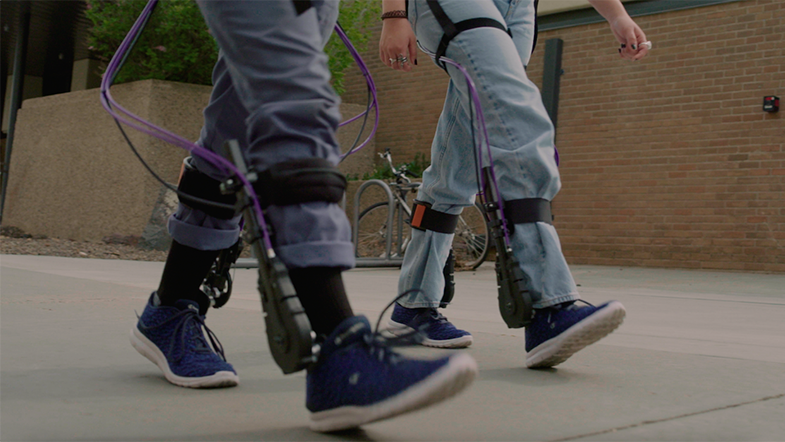
The technology program also seeks to unlock potential that can be difficult to access through conventional means. Researchers are developing voice libraries and exploring brain computer interfaces for people whose physical impairments affect their ability to communicate. Exoskeletons could help young children exercise and become more mobile, while new wheelchair designs are being developed to navigate stairs and allow users to stand. This work extends into startup development through Remarkable, Cerebral Palsy Alliance’s disability tech acceleration initiative. The program supports innovators developing inclusive technologies for people with disability that extend beyond cerebral palsy to areas including Parkinson’s disease, multiple sclerosis, dementia and stroke. Prof Badawi believes that additional philanthropic funding could help take some of these innovations further, giving researchers and technology developers the opportunity to develop promising ideas and move them closer to practical solutions that can improve people’s lives. “Philanthropists are solution-focused and brave in the way they back new ideas and innovations. So when a philanthropist asks me where we think the investment has the biggest leverage, I say that investing in disability innovation is a really good area because so many technological solutions that are developed for cerebral palsy can be applied to wider audiences and help many groups of people. We’re living in an amazing era where the right investment can do so much. In our case, it can help turn these innovative ideas into life-changing solutions that will benefit so many people.”
Find out more about Equity Trustees Philanthropy and Grant Funding
Find out more about Cerebral Palsy Alliance
Photo credit: Cerebral Palsy Alliance