How better workplaces are unlocking neurodivergent talent
Neurodivergent Australians have the skills many employers need. Here’s how one organisation, with support from the William Buckland Foundation, managed by Equity Trustees, is creating pathways to employment by rethinking recruitment and workplace practices.
Different ways of thinking can be a powerful workplace advantage. Yet for the one in five Australians who are neurodivergent, including people with autism, ADHD, dyslexia and other neurological differences, those strengths are not always recognised or given the opportunity to shine.
Geoff Smith, CEO of Australian Spatial Analytics (ASA), says many neurodivergent Australians are unemployed or underemployed because recruitment and workplace systems are still designed around neurotypical ways of thinking, communicating and demonstrating ability.
"Employment is about much more than a pay cheque," Geoff says. "It's closely linked to confidence, identity and a sense of belonging. Neurodivergent people have so many extraordinary skills to offer workplaces and yet, so many are sitting at home unemployed."
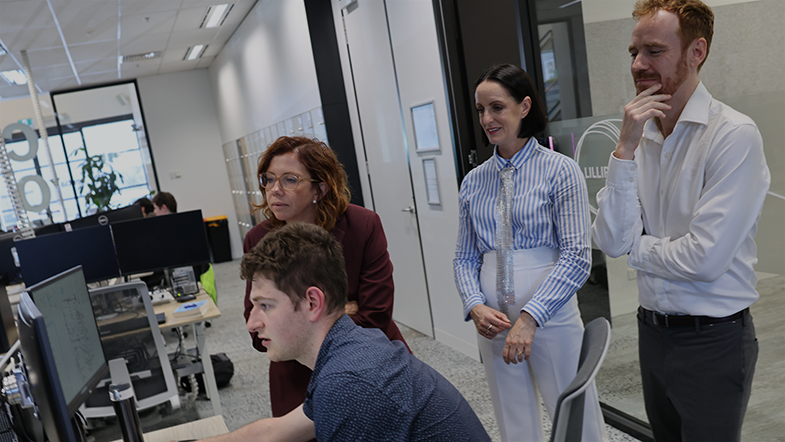
Established in 2020, ASA trains and employs neurodivergent people as geospatial and engineering data analysts, providing paid employment while building workplace skills for long-term careers. Geoff says the key to creating meaningful employment is changing the way people are recruited, trained and supported.
That approach is being strengthened through ASA’s Integrated Transition Project with support from the William Buckland Foundation. The four-year initiative provides training, paid employment and workplace support, helping junior analysts build the skills, confidence and experience needed to transition into long-term careers.
“Neurodivergent people have so many extraordinary skills to offer workplaces and yet, so many are sitting at home unemployed.”
It starts with recognising that capability isn't defined by a traditional education pathway. "The regimented way of tertiary education doesn't suit everybody, but that doesn't mean you can't be a great employee doing the actual work.”
The same principle applies to recruitment. "In a job interview, we're not looking to catch you out because the role we want you to deliver isn't about that," Geoff says. "We've changed the interview process because we want people to do their best. We want to employ them."
Candidates receive interview questions in advance, giving them time to prepare and demonstrate what they know. Once employed, expectations are clear, communication is direct and structured and practical workplace adjustments help people do their best work.
"There's lots of little things that you can do, which is great for everybody. It's not just for neurodivergent people. They don't really cost much. They're just different ways of working."
Brendan, a neurodivergent environmental science graduate, struggled to find work that reflected his qualifications.
“Joining ASA gave him the opportunity to apply his skills on commercial geospatial projects, gain valuable industry experience and build confidence in his own abilities. Working alongside a supportive team helped him see a future in the industry,” says Geoff. Brendan has since transitioned to Yarra Valley Water.
The project has so far employed 62 junior data analysts, with 32 transitioning into new roles. By May 2027, ASA aims to employ 100 and support 50 into ongoing employment.
Since its founding in 2020, ASA has created more than 250 careers for young neurodivergent adults, with 76 per cent previously unemployed. More than $8 million has been invested in training and $22 million in wages, while 85 employees have transitioned into careers with other organisations.
"The goal has always been transition," Geoff says. "We want people to leave us because they've found the next step in their career."
Find out more about Equity Trustees Philanthropy and Grant Funding
Find out more about the William Buckland Foundation
Photo credit: Australian Spatial Analytics